How DocMind works
Not a chatbot with a file attached. Behind DocMind sits an AI-powered solution made of two separate processes: one runs once, the other runs with every question.
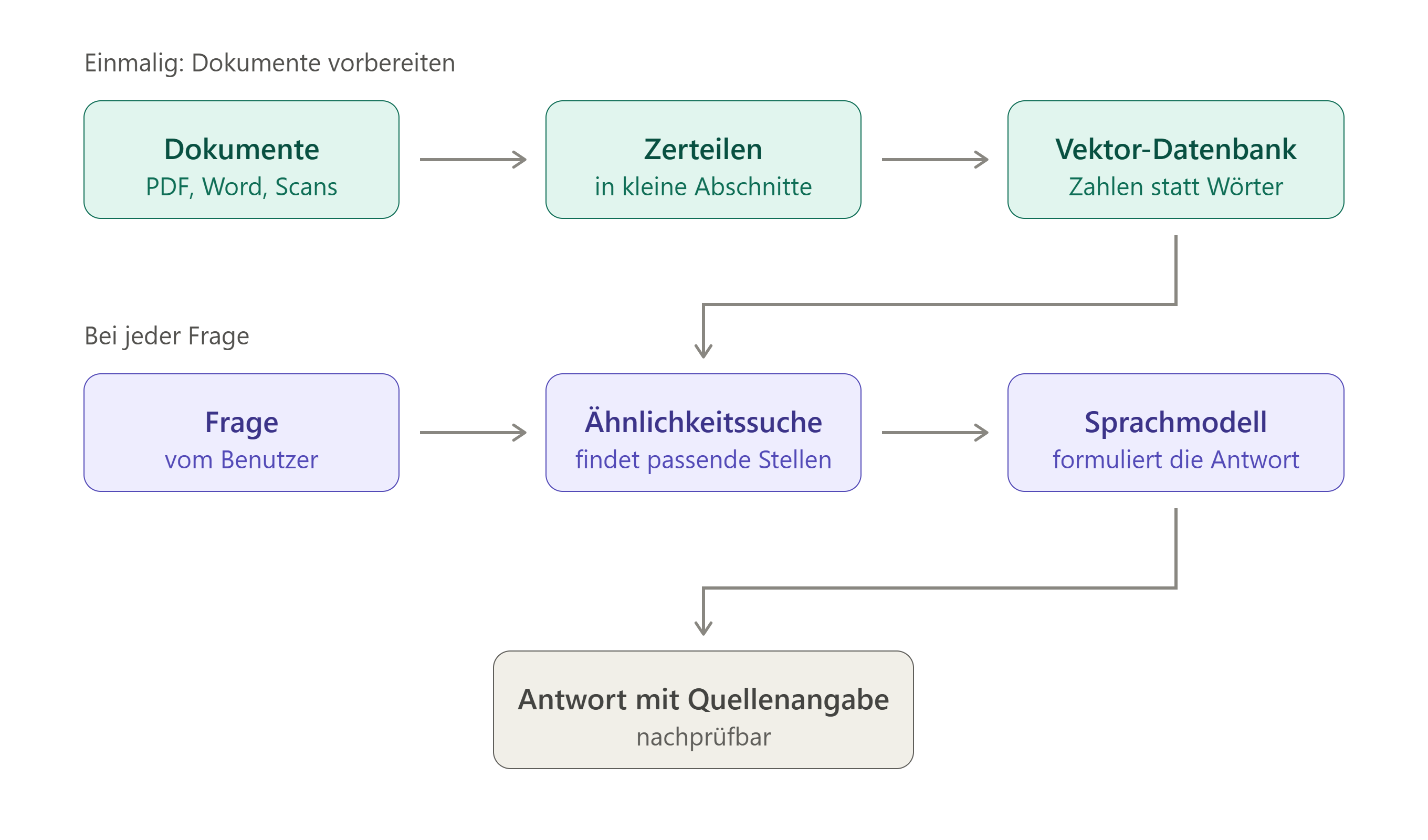
Once: preparing the documents
Every uploaded document is cut into small sections. Each section is then stored as a row of numbers that captures its meaning, not its wording. A section about a notice period and one about a cancellation deadline end up close together, even though they share hardly a word.
With every question
Your question is turned into the same kind of numbers, and the sections closest to it are pulled out. Only those go to the language model. It does not search and it does not know your documents — it writes the answer from what was handed to it.
Why every answer names its source
Because the sections are known before the answer is written, it is recorded which document each one came from. The source is therefore not an addition afterwards; it falls out of the process. That is what makes an answer checkable.
Why holdings are counted, not estimated
A retrieval system only ever sees the handful of sections it just found. Asked how many documents there are, it could only guess. DocMind therefore passes the real inventory of your library alongside — so a question about numbers is answered from the record, not from the excerpt.
What that means for your files
Nothing leaves your library that was not asked for. Only the matching sections travel to the model for each question, not the whole document and not the whole collection.